AI Co-Designers: How Machines Are Reshaping the Creative Process
Head of Events at IEEE WIE CEG

Abstract
Generative AI tools such as ChatGPT, Midjourney, and RunwayML are transforming the creative landscape—blurring the line between human inspiration and machine intelligence. This article explores how AI operates not just as a tool but as a co-designer, collaborating in workflows across art, music, code, and storytelling. We go beyond the 'AI is stealing jobs' narrative to examine how machines enhance creativity while posing challenges to originality, authorship, and identity. By combining theoretical frameworks with hands-on demonstrations, this article aims to understand the future of creative collaboration between humans and intelligent systems.
Introduction
The creative process is undergoing a radical transformation. Artificial intelligence is no longer just a tool but an active collaborator—one that paints, composes, writes, and codes alongside humans. Tools like ChatGPT, Midjourney, and Sora are redefining what it means to "create," pushing us into an era of co-design where machines offer not just suggestions but stylistic contributions.
This article explores how these AI tools are reshaping creative workflows, combining human intuition with machine intelligence. By experimenting with these tools firsthand and analyzing their outputs, we attempt to understand AI's role not as a competitor, but as a creative collaborator.
AI Co-Designers: Transforming the Creative Landscape
Theoretical Foundations
The foundation of AI co-creativity rests on the concept of mixed-initiative interaction, where both human and machine contribute meaningfully to the outcome. Rather than simply automating tasks, modern AI systems participate in exploratory and transformational creativity, offering ideas that expand a user's imagination.
Key Theoretical Frameworks
Computational Creativity (Margaret Boden): Distinguishes between P-creativity (personal novelty) and H-creativity (historical novelty). Most AI tools today aim for P-creativity—ideas new to the user.
Mixed-Initiative Design: A collaborative approach where both human and AI contribute to the creative process, with the system adapting to user preferences and providing intelligent suggestions.
Collaborative Intelligence: The concept that human-AI collaboration can achieve outcomes that neither could accomplish alone, leveraging the strengths of both parties.
AI Tools in Creative Workflows
Text Generation and Writing
ChatGPT and Large Language Models
- Assist with brainstorming and idea generation
- Help with content creation and editing
- Provide creative writing prompts and suggestions
- Support collaborative storytelling
Applications in Creative Writing
- Novel and screenplay development
- Poetry and creative prose
- Content marketing and copywriting
- Educational content creation
Visual Arts and Design
Midjourney, DALL-E, and Stable Diffusion
- Generate concept art and illustrations
- Create design mockups and prototypes
- Assist with visual brainstorming
- Support artistic exploration
Design Applications
- Graphic design and branding
- Product design and visualization
- Architectural concept development
- Fashion and textile design
Music and Audio
AI Music Generation Tools
- Compose original music pieces
- Generate background scores
- Assist with arrangement and orchestration
- Create sound effects and audio elements
Collaborative Music Creation
- Human-AI co-composition
- Style transfer and genre blending
- Real-time performance enhancement
- Educational music applications
Code and Software Development
AI Programming Assistants
- Code generation and completion
- Bug detection and fixing
- Documentation generation
- Algorithm optimization
Creative Programming
- Generative art and interactive installations
- Game development and procedural content
- Data visualization and storytelling
- Educational programming tools
Case Studies: AI in Creative Practice
Visual Arts Collaboration
Case Study 1: Digital Artist and Midjourney
Prompt 1: "Create a futuristic cityscape with flying cars and neon lights, cyberpunk style"
Tool: Midjourney
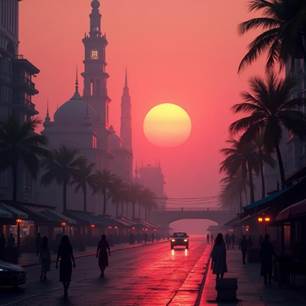 AI-Generated Futuristic Cityscape - Midjourney Output
A digital artist used Midjourney to generate initial concepts for a series of illustrations. The AI provided unexpected visual elements that the artist incorporated into their final work, resulting in a unique hybrid style that combined human artistic vision with AI-generated elements.
Key Insights:
- AI excels at generating variations and exploring possibilities
- Human artists provide direction, context, and final artistic decisions
- The collaboration enhanced creative output beyond what either could achieve alone
Character Design and Storytelling
Case Study 2: Character Creation with ChatGPT
Prompt 2: "Design a character for a fantasy video game, complete with personality traits, backstory, and skillset"
Tool: ChatGPT
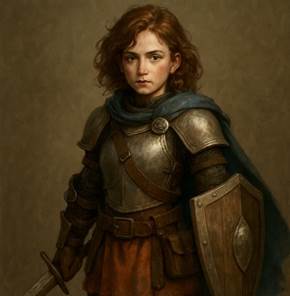 AI-Generated Character Design - ChatGPT Output
Character Name: Sylra Moondusk
Personality: Mysterious, fiercely independent, and deeply connected to nature. She has a quiet strength and an unshakeable sense of justice.
Backstory: Born under a rare lunar eclipse, Sylra was raised by a reclusive druid who taught her the ancient ways of nature magic. She discovered her ability to communicate with animals at a young age and has since dedicated her life to protecting the natural world from those who would exploit it.
Skillset:
- Nature magic and elemental control
- Animal communication and summoning
- Stealth and survival skills
- Herbalism and healing
Observations:
- AI tools can generate detailed character concepts quickly
- Human creators maintain creative control and artistic vision
- The partnership accelerated the character development process
Video Generation and Animation
Case Study 3: Video Creation with RunwayML
Prompt 3: "A woman walking through clouds, anime style, magical realism feel"
Tool: RunwayML
 AI-Generated Video Scene - RunwayML Output
Observation: The AI successfully captured the ethereal, dreamlike quality requested in the prompt. The anime-style aesthetic was well-executed, though the visual imagination was inherently text-bound. The tool demonstrated impressive capability in translating abstract concepts into visual media.
Challenges and Ethical Considerations
Authorship and Ownership
Questions of Attribution
- Who owns AI-generated content?
- How should AI contributions be credited?
- What constitutes original work in AI collaboration?
Legal and Copyright Issues
- Copyright implications of AI-generated content
- Licensing and usage rights
- Protection of human creative contributions
Authenticity and Originality
Concerns About Homogenization
- Risk of AI-generated content becoming formulaic
- Potential loss of human artistic voice
- Questions about creative authenticity
Maintaining Human Creativity
- Ensuring human artists maintain their unique perspective
- Balancing AI assistance with human creativity
- Preserving the value of human artistic expression
Bias and Representation
Algorithmic Bias in Creative Tools
- AI tools may reflect biases in training data
- Potential for reinforcing stereotypes
- Need for diverse and inclusive AI systems
Addressing Bias
- Importance of diverse training data
- Need for human oversight and curation
- Responsibility of AI developers and users
Results and Observations
AI Co-Designer Performance
Strengths of AI Collaboration
- AI co-designers perform best when guided closely—they're idea enhancers, not replacements
- ChatGPT excels at text generation and creative writing assistance
- Midjourney and similar tools are excellent for visual concept generation
- AI tools can accelerate the creative process and provide unexpected insights
Limitations and Challenges
- AI tools may lack contextual understanding
- Generated content can be generic or formulaic
- Human oversight and curation remain essential
- AI tools require careful prompting and direction
User Experience and Satisfaction
Positive Experiences
- Users reported increased creative productivity
- AI tools helped overcome creative blocks
- Collaboration felt more like partnership when AI suggestions were iterative and adaptive
Areas for Improvement
- Need for better user interfaces and controls
- Importance of maintaining human creative control
- Desire for more transparent AI decision-making
Discussion: The Shift in Creative Agency
As AI becomes a co-designer, human agency in creativity shifts from creator to curator-director. While AI can generate novel ideas, it lacks the intent and contextual depth that human artists bring. The reliance on tool-dependent aesthetics (e.g., Midjourney's visual signature) raises concerns about homogenized creativity. However, AI's augmentation of human workflows democratizes access to professional-level outputs, making creativity more inclusive.
This evolution necessitates a rethinking of creative ownership, skill valuation, and the future role of the "human artist" in AI-mediated projects.
Future Directions
Emerging Technologies
Advanced AI Capabilities
- More sophisticated understanding of context and intent
- Better integration with human creative workflows
- Improved user interfaces and controls
New Creative Applications
- Virtual and augmented reality content creation
- Interactive and generative storytelling
- Real-time collaborative creation tools
Educational Implications
Teaching Creative AI Collaboration
- Integrating AI tools into creative education
- Teaching students to work effectively with AI
- Developing critical thinking about AI-generated content
Skill Development
- Prompt engineering and AI interaction
- Creative direction and curation
- Ethical considerations in AI collaboration
Conclusion
AI co-designers are no longer just tools; they are collaborators shaping the future of creativity. Their strength lies not in replacing human imagination but in extending it. The challenge ahead is not about whether AI can create, but how we define authorship, originality, and creative control in this new partnership.
With thoughtful experimentation, clear ethical guidelines, and a focus on human-AI collaboration rather than competition, we can harness the full potential of AI to enhance human creativity and expand the boundaries of what's possible in art, music, writing, and design.
The future of creativity is not human versus machine, but human with machine—a partnership that amplifies our creative potential and opens new possibilities for artistic expression and innovation.
References
- Boden, M. A. (2004). The Creative Mind: Myths and Mechanisms. Routledge.
- Zhou, J., Li, R., Tang, J. et al. Understanding Nonlinear Collaboration Between Human and AI Agents: A Co-Design Framework, arXiv, 2024. https://arxiv.org/abs/2401.07312
- Anantrasirichai, N., Bull, D. Artificial Intelligence in the Creative Industries: A Review, arXiv, 2020. https://arxiv.org/abs/2007.12391
- Shneiderman, B. (2020). Human-Centered AI. Oxford University Press.
- Edmonds, E. A. (2018). The Art of Interaction: What HCI Can Learn from Interactive Art. Morgan & Claypool Publishers.
Swetha R Barade
Head of Events at IEEE WIE CEG
Passionate about technology and research, contributing valuable insights to the IEEE WIE-CEG community.
More Articles
Bias Toward Simplicity in Code-Generating LLMs: An Empirical Evaluation of Algorithmic Reasoning Depth
This study investigates whether LLMs exhibit a bias toward simpler, suboptimal algorithms, even when more efficient or theoretically sound solutions exist. Through empirical evaluation of state-of-the-art LLMs across various algorithmic tasks, we reveal consistent preferences for naive solutions.
65 Years After Dijkstra: An Analytical Perspective on Breaking the Sorting Barrier
The single-source shortest paths (SSSP) problem has been central to algorithmic research since the 1950s. Classical deterministic methods such as Dijkstra's algorithm have long been constrained by a sorting barrier, with runtime O(m+n log n) in sparse graphs.
Explore More Research
Discover more cutting-edge research and insights from our talented club members.