Microsoft's Majorana 1 Chip: Building Quantum Qubits That Don't Break
Member at IEEE WIE CEG
Abstract
Quantum computing is no longer a far-off dream, it's a rapidly growing field with big players like Google, IBM, and Microsoft competing to build the most powerful machines ever made. While most companies focus on superconducting or trapped-ion qubits, Microsoft is taking a very different route with Majorana zero modes. This article explores Microsoft's Majorana 1 quantum chip, the first hardware platform to demonstrate topological quantum computing building blocks.
Introduction
In 2024, Microsoft announced a breakthrough: the Majorana 1 quantum chip — the first hardware platform to demonstrate a building block of what's called topological quantum computing. Unlike typical quantum chips, which are error-prone and fragile, the Majorana 1 aims to be inherently more stable, scalable, and reliable.
What Is a Majorana Particle (And Why Should You Care)?
Back in the 1930s, Italian physicist Ettore Majorana predicted a bizarre kind of particle — one that is its own antiparticle. While most particles have opposites (like electrons and positrons), Majorana particles are perfectly symmetrical.
Fast forward a century later, and scientists have found strong evidence of these "Majorana zero modes" in special materials — particularly in superconducting nanowires.
Qubits That Don't Break
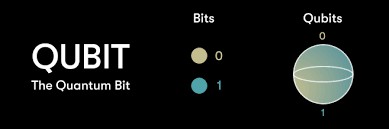
Qubits are the brain cells of quantum computers that are extremely powerful but heavily sensitive to noise! And here comes Majorana Qubits to save the day.
A topological qubit is a special kind of qubit designed to be naturally protected from errors, by storing information in the geometry (or topology) of a quantum system and not just in the state of a particle.
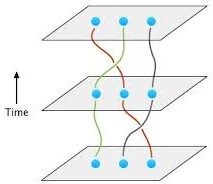
Instead of flipping qubits between 0 and 1, topological quantum computers braid quantum information around pairs of Majorana particles. This braiding is extremely hard to mess up, making it more resilient to the kinds of noise that destroy other quantum systems.
Majorana zero modes enable topological qubits that are naturally protected from errors.
A topological qubit is a special kind of qubit designed to be naturally protected from errors, by storing information in the geometry (or topology) of a quantum system and not just in the state of a particle.
Instead of flipping qubits between 0 and 1, topological quantum computers braid quantum information around pairs of Majorana particles. This braiding is extremely hard to mess up, making it more resilient to the kinds of noise that destroy other quantum systems.
Microsoft's Majorana 1: What They Actually Built
In 2024, Microsoft unveiled the Majorana 1 chip, and for the first time, demonstrated topological qubits built from Majorana zero modes. This wasn't just a simulation or lab curiosity — this was hardware that could be cooled to near absolute zero and used to isolate and manipulate these special particles.
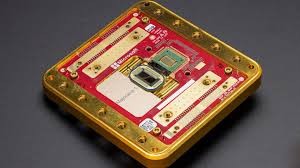
 Microsoft's Majorana 1 chip - the first hardware platform to demonstrate topological quantum computing building blocks.
Microsoft is working on reducing errors at the physics level, making large-scale quantum computing simpler down the road.
Why Is This a Big Deal?
- Fewer qubits needed to do useful work is like ChatGPT'ing your syllabus and studying fast when your friends are 2 pages deep into the 700 page textbook
- Simplified error correction - Imagine writing 1000 lines of code without having to spend the next 10 hours debugging
- Topological protection - The chip opens the door to topological quantum computing, which has been a theoretical dream for decades
- Longer coherence times - More operations before the qubit "forgets" its state
Are There Any Disadvantages?
Of course! Just like our qubits, Majorana Particles have their own disadvantages too:
1. It's Not Yet a Full Quantum Computer
Majorana 1 is a prototype, not a complete system. It demonstrates that Majorana zero modes can exist and be manipulated, but we don't yet have working topological qubits performing full quantum logic operations.
2. Hard to Create and Maintain Majorana Modes
Majorana zero modes only appear under very specific conditions:
- Ultra-low temperatures (near absolute zero)
- Precise semiconductor-superconductor hybrid materials
- Clean, low-noise environments
These requirements make the chip expensive and complex to fabricate and operate.
 The future of quantum computing may lie in topological systems that are inherently fault-tolerant.
Is This the Future of Quantum Computing?
Microsoft's Majorana 1 chip is not just a cool physics experiment — it's a possible paradigm shift. While we're still in the early days of quantum computing, Majorana 1 gives us a glimpse of a future where quantum hardware is not just powerful, but reliable and robust.
By choosing a path no other major company has taken, Microsoft is betting on topological qubits as the foundation for a fault-tolerant, scalable quantum future. It's not the fastest route, but if it works, it could be the most sustainable.
In a field where noise and fragility are the enemy, Microsoft's approach says: "Let's build qubits that don't break in the first place."
References
Trisha Rajesh
Member at IEEE WIE CEG
Passionate about technology and research, contributing valuable insights to the IEEE WIE-CEG community.
More Articles
AI Co-Designers: How Machines Are Reshaping the Creative Process
Exploring how AI tools like ChatGPT, Midjourney, and Sora are transforming creative workflows, blurring the line between human inspiration and machine intelligence in art, music, code, and storytelling.
Bias Toward Simplicity in Code-Generating LLMs: An Empirical Evaluation of Algorithmic Reasoning Depth
This study investigates whether LLMs exhibit a bias toward simpler, suboptimal algorithms, even when more efficient or theoretically sound solutions exist. Through empirical evaluation of state-of-the-art LLMs across various algorithmic tasks, we reveal consistent preferences for naive solutions.
Explore More Research
Discover more cutting-edge research and insights from our talented club members.